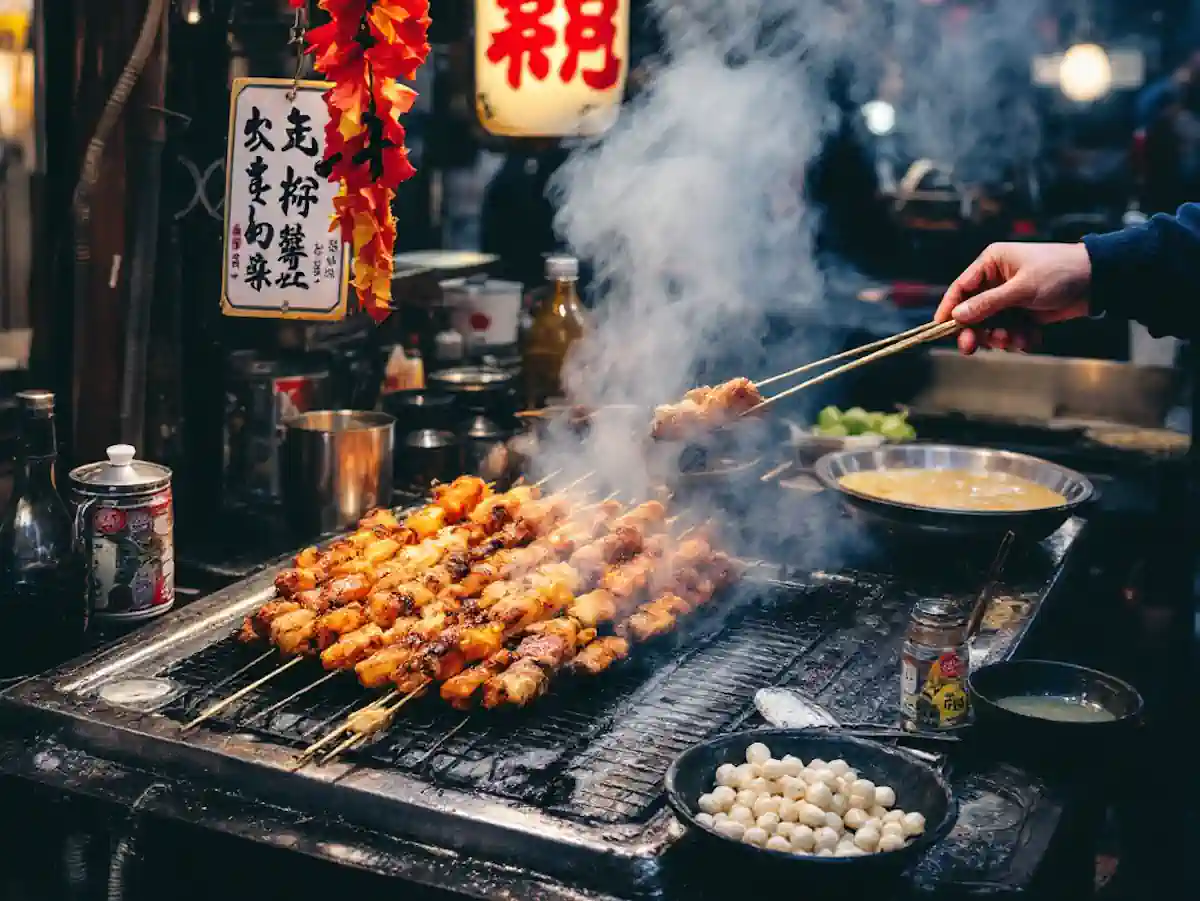
Imagine the sizzle of chicken on a grill. The tantalizing aroma wafts through the air. Your mouth waters in anticipation. Welcome to the world of yakitori, Japan’s beloved skewered delight.
This culinary marvel has captured hearts worldwide. But what’s the secret behind its irresistible charm? Let’s embark on a flavorful journey through yakitori’s rich history and cultural significance.
From Tokyo’s bustling izakayas to your own backyard, yakitori’s appeal is universal. It’s more than just grilled chicken. It’s an experience, a tradition, a craft.
What Exactly is Yakitori?
Yakitori, literally “grilled bird,” is a Japanese dish of skewered chicken. Chefs grill it over charcoal, creating a smoky flavor.
Typically, yakitori features two main seasonings:
- Shio: A simple salt seasoning
- Tare: A sweet and savory soy-based glaze
These flavors enhance the chicken’s natural taste. They create a perfect balance of salty, sweet, and umami.
A Sizzling History
The story of yakitori is as rich and flavorful as the dish itself. While the concept of grilling meat on skewers is ancient, yakitori as we know it today has its roots in Japan’s historical context. The earliest forms of skewered bird meat can be traced back to the Edo period (1603-1868), where recipes for grilling wildfowl, rather than chicken, were documented.
The Meiji Restoration (1868-1912) marked a significant turning point for yakitori. As Japan opened up to Western influences, dietary habits began to change. The long-standing Buddhist prohibition against meat consumption began to wane, allowing for the introduction of chicken as a more common food source. Street vendors started selling yakitori, primarily using chicken offal and less desirable cuts due to the high cost of chicken meat at the time.
Yakitori’s popularity surged after World War II, as Japan’s economy began to recover. The introduction of broiler chickens from the United States made chicken more affordable and accessible, leading to a proliferation of yakitori stalls and restaurants. This period saw the expansion of yakitori to include a wider variety of chicken parts, such as thighs, breasts, skin, and cartilage, reflecting a more comprehensive use of the bird.
The Art of Yakitori
Ingredients and Preparation
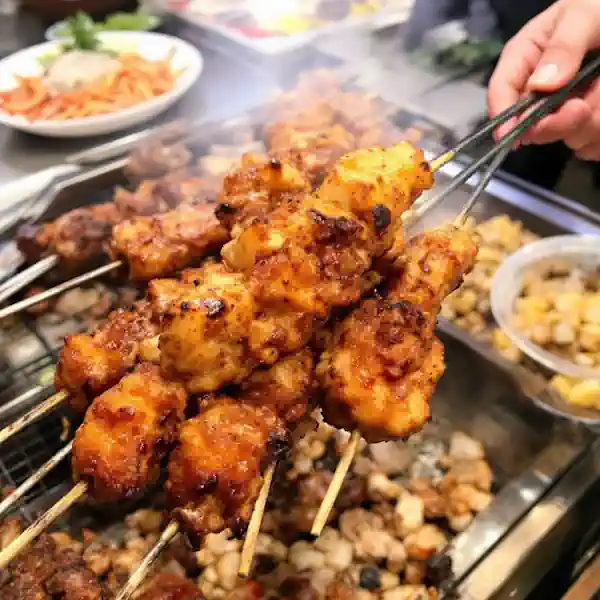
The beauty of yakitori lies in its simplicity and the skill required to perfect it. The core ingredients are:
- Chicken Parts: Various parts of the chicken are used, including thighs (momo), breasts (mune), wings (tebasaki), skin (kawa), liver (rebā), heart (hatsu), and gizzard (sunagimo).
- Vegetables: Commonly used vegetables include scallions (negi), shishito peppers, mushrooms, and asparagus. These are often alternated with chicken on the skewers.
- Yakitori Sauce (Tare): A sweet and savory glaze made from soy sauce, mirin, sake, and sugar. Some variations include garlic and ginger for added depth.
Cooking Techniques
The preparation of yakitori is an art form in itself. Skilled chefs dedicate years to mastering the techniques of skewering and grilling. Here’s how it’s done:
- Skewering: Bamboo skewers are soaked in water for at least 30 minutes to prevent burning. The chicken is cut into uniform pieces and threaded onto skewers, alternating with vegetables like scallions.
- Grilling: Traditionally, yakitori is grilled over binchōtan, a type of white charcoal that provides high heat and a distinct smoky flavor. The skewers are placed over the grill, allowing the chicken to cook evenly.
- Basting: During the final stages of cooking, the skewers are brushed with tare sauce to create a caramelized glaze.
Varieties of Yakitori
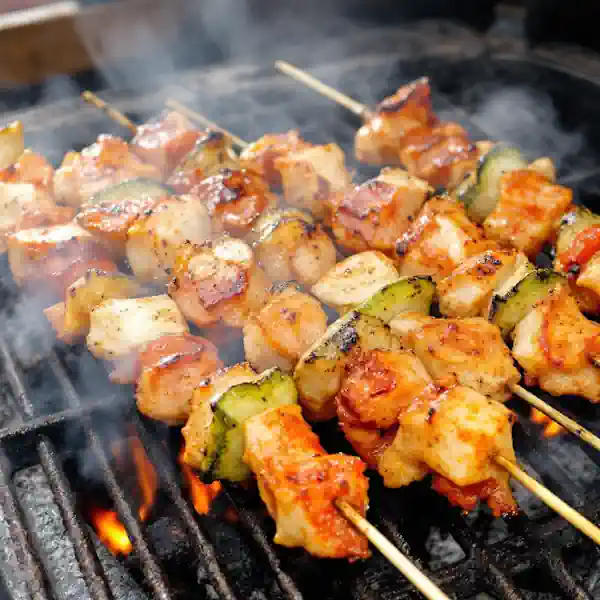
The world of yakitori is diverse, offering a range of flavors and textures to suit every palate. Here are some popular types:
- Momo (Chicken Thigh): One of the most popular yakitori types due to its juicy and tender texture.
- Negima (Chicken and Leek): Pieces of chicken, usually thigh meat, alternated with pieces of leek on the skewer.
- Tsukune (Chicken Meatballs): Flavorful meatballs made from minced chicken mixed with ingredients like green onion and perilla leaf.
- Tebasaki (Chicken Wings): Known for their crispy skin and juicy meat.
- Sasami (Chicken Tenderloin): A leaner cut, often served with a variety of seasonings such as wasabi or umeboshi (pickled plum).
- Reba (Chicken Liver): A rich and flavorful option, often grilled to a tender finish.
- Kawa (Chicken Skin): A crispy and savory treat made from chicken skin.
- Nankotsu (Chicken Cartilage): Offers a unique texture, being both crunchy and chewy.
The Yakitori Experience: More Than Just Food
Yakitori is not just a dish. It’s a cultural experience. In Japan, it’s often enjoyed in izakayas (Japanese pubs). These lively establishments offer a communal dining atmosphere.
Picture this: You’re seated at a counter. The chef grills yakitori right before your eyes. The sizzle, the smoke, the anticipation. It’s a feast for all senses.
Yakitori pairs perfectly with beer or sake. It’s a favorite for after-work gatherings. It brings people together, encouraging conversation and camaraderie.
Global Popularity and Adaptations
While yakitori remains a staple in Japan, it has gained international popularity, with restaurants not only in Japan but also in major cities around the world, including New York, Hong Kong, and Seoul, being featured in Michelin Guides. This global reach highlights the dish’s adaptability and appeal across different cultures.
As yakitori has spread globally, it has been adapted to suit local tastes and available ingredients. These adaptations often involve changes in seasoning, cooking techniques, and presentation.
For example, some international versions may incorporate other meats or vegetarian options to cater to diverse dietary preferences. Fusion cuisine has also embraced yakitori, incorporating it into dishes like tacos or wraps.
Health Aspects: Guilt-Free Indulgence?
Good news for health-conscious foodies! Yakitori can be a relatively healthy choice. A typical serving contains about 357 calories. It’s packed with protein – about 36 grams per serving.
The fat content is moderate, with 19 grams per serving. This includes 4.76 grams of saturated fat. Compared to many meat dishes, it’s a leaner option.
However, watch out for the sodium. Yakitori can be high in salt, especially with soy-based seasonings. Moderation is key, especially if you’re watching your sodium intake.
Your Yakitori Adventure Awaits
Yakitori is more than just grilled chicken. It’s a journey through Japan’s culinary landscape. It’s a testament to simplicity, skill, and flavor.Whether you’re in Tokyo or your hometown, seek out this skewered sensation. Better yet, try making it at home. Gather friends, fire up the grill, and create your own yakitori experience.
Remember, every bite of Japanese culture. It’s a celebration of food, community, and craftsmanship. So go ahead, pick up that skewer, and savor the sizzle!