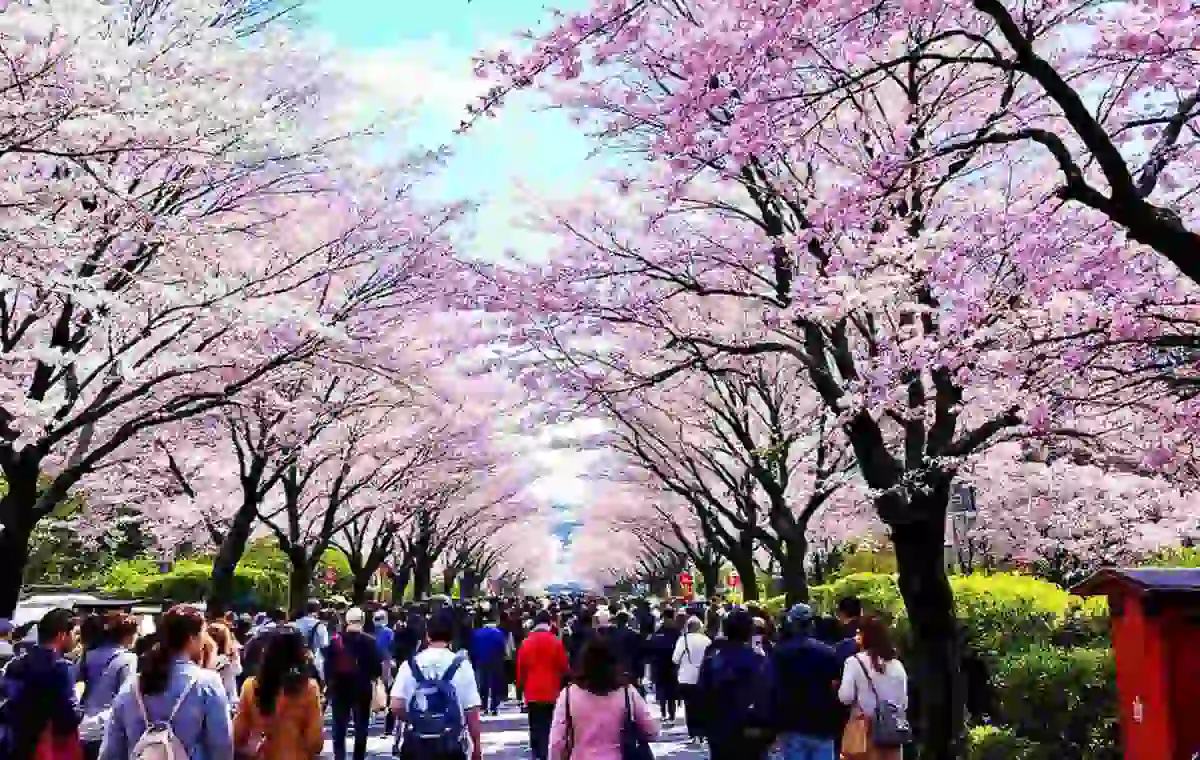
Every spring, Japan transforms into a wonderland of pink and white. This is the season of hanami, the centuries-old tradition of cherry blossom viewing. People gather under blooming sakura trees to celebrate nature’s fleeting beauty.
Hanami is more than just a natural spectacle. It’s a cultural event deeply rooted in Japanese history and philosophy. The fleeting blossoms symbolize life’s ephemeral nature, reminding us to cherish each moment.
The Origins of Hanami
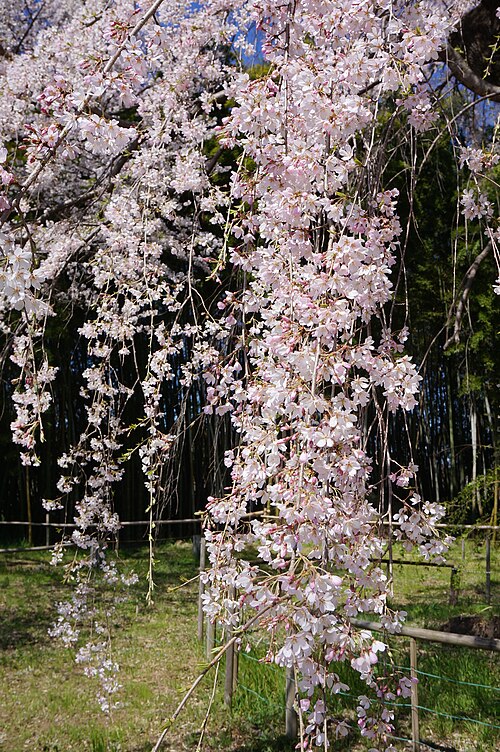
Hanami’s roots stretch back over a millennium. The practice began during the Nara period (710-794 CE). Initially, it focused on plum blossoms, influenced by Chinese customs.
The transition to cherry blossoms occurred during the Heian period (794-1185 CE). Emperor Saga held a sakura viewing party in 812 CE. This event marked cherry blossoms becoming synonymous with hanami.
During the Heian era, hanami was an aristocratic activity. The Imperial Court in Kyoto hosted elaborate flower-viewing parties. These gatherings combined social events with poetic reflection.
The Spread of Hanami
Hanami gradually spread beyond the aristocracy. It reached the samurai class and eventually the common people. This democratization was significantly influenced by shogun actions.
Tokugawa Yoshimune, for instance, planted cherry trees along riverbanks. This made sakura’s beauty accessible to the general populace. By the Edo period (1603-1868), hanami had become a widespread cultural practice.
Today, hanami is a beloved national pastime. People of all ages and backgrounds celebrate it. The tradition involves gathering under blooming cherry trees with loved ones.
The Cultural Significance of Hanami
Hanami holds deep symbolic meaning in Japanese culture. The sakura represents hope, new life, and the transient nature of existence.
This symbolism is central to hanami’s importance. It reflects the Japanese concept of “mono no aware”. This term describes the bittersweet awareness of life’s impermanence.
Cherry blossoms bloom for only a short period each year. Their brief beauty serves as a poignant reminder. It encourages us to appreciate life’s fleeting moments.
When to Experience Hanami
The timing of cherry blossom season varies across Japan. It depends on geographical location and yearly weather conditions.
In Okinawa, the southernmost prefecture, blossoms appear as early as January. Tokyo and Kyoto typically see peak blooms from late March to early April.
Hokkaido, Japan’s northernmost island, experiences the last blooms. These usually occur in early May. This progression allows for an extended hanami season across the country.
Popular Hanami Locations

Japan offers numerous iconic spots for cherry blossom viewing. Each location has its unique charm and historical significance.
- Mount Yoshino, Nara Prefecture: Known for thousands of cherry trees.
- Shinjuku Gyoen, Tokyo: A favorite among locals and tourists alike.
- Himeji Castle, Hyogo Prefecture: Offers a stunning historical backdrop.
- Meguro River, Tokyo: Popular for both day and night viewing.
- Nakijin Castle, Okinawa: Provides an early start to the season.
- The Kamo River, Kyoto: Offers a serene setting for hanami.
How to Participate in Hanami
Participating in hanami is a must-do experience in Japan. Here’s how you can join in the celebration:
Picnicking Under Sakura Trees
The most traditional way to celebrate is picnicking under cherry trees. Gather with friends or family in parks and gardens. Spread out blankets and enjoy food and drinks.
Enjoying Traditional Foods and Drinks
During hanami, people often bring special foods. Bento boxes, snacks, and sweets are common. Sake and tea are popular drink choices.
Attending Organized Events
Many parks host events during cherry blossom season. Look for festivals, fairs, and cultural performances. These often showcase traditional Japanese music and dance.
Exploring Parks and Gardens
Take leisurely walks through parks and gardens. This allows for a more tranquil hanami experience. Enjoy the blossoms at your own pace.
Visiting Temples and Shrines
Many temples and shrines are popular hanami spots. They offer a serene backdrop for the blossoms. Some have special evening illuminations.
Experiencing Yozakura
Yozakura, or nighttime cherry blossom viewing, is magical. Many parks illuminate the cherry trees after dark. This creates a unique and enchanting atmosphere.
Hanami Etiquette
While enjoying hanami, it’s important to respect local customs. Here are some etiquette tips:
- Clean up after your picnic. Leave no trace behind.
- Be mindful of noise levels. Respect others’ enjoyment.
- Don’t damage the trees. Avoid picking blossoms or breaking branches.
- Follow park rules. Some areas may have specific guidelines.
- Be considerate when reserving spots. Don’t take up more space than needed.
The Global Influence of Hanami

Hanami’s popularity has spread beyond Japan’s borders. Many countries now host their own cherry blossom festivals.
In the United States, Washington D.C. is famous for its cherry trees. These were a gift from Japan in 1912. The annual National Cherry Blossom Festival draws millions of visitors.
European countries have also embraced hanami. In Finland, people gather in Helsinki’s Roihuvuori district. Local Japanese residents and companies donated 200 cherry trees here.
These international celebrations highlight cherry blossoms’ universal appeal. They serve as symbols of cultural exchange and friendship.
The Future of Hanami
As climate change affects global weather patterns, hanami faces new challenges. Changing temperatures impact cherry blossom blooming times. This could alter the traditional hanami calendar.
Despite these challenges, hanami’s spirit remains strong. It continues to captivate both Japanese citizens and international visitors. The tradition adapts while maintaining its cultural significance.
Hanami reminds us to appreciate life’s fleeting moments. It encourages us to connect with nature and each other. As long as cherry trees bloom, people will gather to celebrate their beauty.
In conclusion, hanami is more than just flower viewing. It’s a celebration of life, nature, and cultural heritage. Whether in Japan or abroad, experiencing hanami offers a unique glimpse into Japanese culture.
So, next spring, why not join in this beautiful tradition? Gather under the cherry blossoms. Reflect on life’s impermanence. And most importantly, create lasting memories with those around you.