As winter’s chill begins to wane and the first whispers of spring fill the air, Japan comes alive with a unique and spirited celebration known as Setsubun. This centuries-old festival, deeply rooted in Japanese culture, marks the transition between seasons and serves as a powerful symbol of renewal, purification, and the eternal struggle between good and evil.
The Origins and Evolution of Setsubun
Setsubun, which literally translates to “seasonal division,” has its roots in ancient Chinese customs that were introduced to Japan as early as the 8th century. Originally known as tsuina, this ritual was practiced at the imperial court as a means to ward off evil spirits during the changing of seasons. Over time, this custom evolved and took on distinctly Japanese characteristics, becoming an integral part of the nation’s cultural fabric.
The Muromachi period (1336–1573) saw significant developments in Setsubun practices, particularly the introduction of mamemaki, or bean-throwing, which would become the festival’s most iconic ritual. This evolution reflects the Japanese propensity for adapting and refining imported customs to suit their own cultural sensibilities and spiritual beliefs.
The Heart of Setsubun: Rituals and Customs
Mamemaki: Casting Out Evil, Inviting Good Fortune
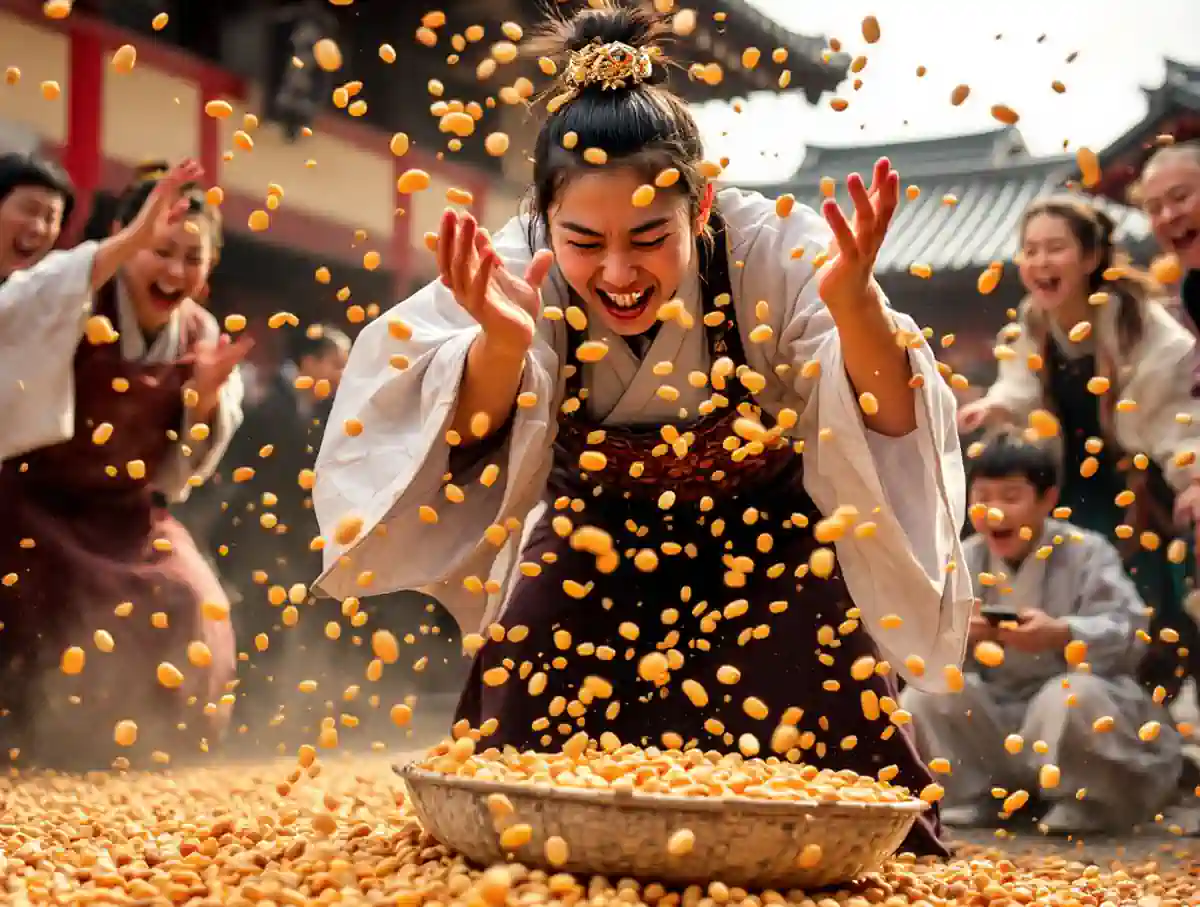
At the core of Setsubun celebrations lies the practice of mamemaki, a ritual that encapsulates the festival’s essence of purification and renewal. During this ceremony, roasted soybeans, known as fukumame or “fortune beans,” are thrown either out the door or at a family member wearing an oni (demon) mask. As the beans fly through the air, participants enthusiastically chant “Oni wa soto! Fuku wa uchi!” which translates to “Demons out! Good fortune in!”
This act is not merely a physical gesture but a profound spiritual practice. The beans, symbols of purity, are believed to possess the power to cleanse and protect. The act of throwing them represents the casting away of misfortune and the embrace of positive energy, reflecting the broader Japanese cultural emphasis on purification and renewal.
In many households, the role of the oni is often playfully assumed by the father or another family member, creating a lighthearted yet meaningful family bonding experience. This domestic ritual brings the spiritual aspects of Setsubun into the heart of the home, reinforcing family ties and cultural values.
Eating the Age-Old Fortune
Following the bean-throwing ritual, a unique custom takes place that connects one’s age to the promise of good fortune. Each family member eats a number of roasted soybeans equal to their age, plus one extra for luck in the coming year. This practice not only serves as a delicious treat but also as a personal reflection on the passing of time and the hope for a prosperous future.
Ehomaki: A Roll of Good Fortune
Another delectable tradition associated with Setsubun is the consumption of ehomaki, a special type of sushi roll. This is no ordinary sushi; ehomaki is a thick roll containing seven ingredients, each symbolizing one of the seven deities of good fortune in Japanese mythology. The ritual of eating ehomaki is steeped in symbolism and mindfulness.
To partake in this tradition, one must face the year’s lucky direction, which is determined by the Chinese zodiac, and eat the entire roll in silence without cutting it. This meditative act is believed to invite good fortune and prosperity for the coming year. The unbroken roll represents the continuity of good luck, while the silent consumption allows for reflection and intention-setting.
Hiiragi Iwashi: A Pungent Ward Against Evil
In some regions of Japan, particularly in the Kansai area, households employ an additional layer of spiritual protection through the practice of hiiragi iwashi. This involves displaying a decoration made of holly leaves and a sardine head at the entrance of homes. The sharp thorns of the holly and the pungent odor of the fish are believed to repel evil spirits, creating a barrier against misfortune.

This practice showcases the regional variations in Setsubun celebrations and highlights the creative ways in which different communities interpret and enhance the festival’s protective aspects.
Setsubun in the Public Sphere
While Setsubun has strong roots as a family-centered celebration, it has also evolved into a significant public event that brings communities together in joyous celebration.
Temple and Shrine Celebrations
Many of Japan’s temples and shrines host elaborate Setsubun events that draw large crowds of both locals and tourists. These public ceremonies often feature celebrities, sumo wrestlers, or local dignitaries participating in grand-scale bean-throwing events. The sight of thousands of people reaching out to catch the thrown beans, believed to bring good luck, is a testament to the festival’s enduring popularity and cultural significance.
One of the most famous Setsubun celebrations takes place at Sensō-ji temple in Tokyo, where the festival attracts nearly 100,000 attendees. The energy and excitement at these events are palpable, as people of all ages come together to participate in this centuries-old tradition.

Modern Adaptations and Commercialization
As with many traditional festivals, Setsubun has not been immune to the influences of modernization and commercialization. Today, stores across Japan stock Setsubun-themed products in the lead-up to the festival, including packaged roasted soybeans, oni masks, and ehomaki sushi rolls. This commercialization, while sometimes criticized for diluting tradition, has also played a role in maintaining the festival’s relevance in contemporary Japanese society.
Moreover, the involvement of celebrities and the media coverage of major Setsubun events have helped to keep the tradition alive and interesting for younger generations. Social media has also played a role in spreading awareness and allowing people to share their Setsubun experiences with a wider audience.
The Global Reach of Setsubun
While Setsubun remains primarily a Japanese celebration, its unique customs and profound symbolism have captured the imagination of people around the world. Japanese communities in various countries often organize Setsubun events, allowing expatriates to maintain their cultural traditions and introducing local populations to this fascinating aspect of Japanese culture.
These international celebrations serve as cultural bridges, fostering understanding and appreciation of Japanese traditions beyond the country’s borders. They provide an opportunity for people of diverse backgrounds to participate in the symbolic act of banishing evil and inviting good fortune, concepts that resonate across cultural boundaries.
The Spiritual and Cultural Significance of Setsubun
Setsubun’s enduring popularity is a testament to its deep spiritual and cultural significance in Japanese society. The festival embodies several key aspects of Japanese cultural values and beliefs:
Purification and Renewal
The concept of purification is central to many Japanese rituals and festivals, and Setsubun is no exception. The act of throwing beans to drive away evil spirits symbolizes the cleansing of one’s environment and spirit, preparing for a fresh start with the coming of spring. This aligns with the Japanese appreciation for new beginnings and the cyclical nature of life and seasons.
Harmony Between Tradition and Modernity
Setsubun exemplifies how traditional customs can adapt and thrive in a modern context. While the core rituals remain largely unchanged, their presentation and participation have evolved to suit contemporary lifestyles. This flexibility ensures that Setsubun remains relevant and meaningful to new generations of Japanese people.
Community and Family Bonding
The festival provides an opportunity for families and communities to come together, strengthening social bonds through shared traditions. Whether participating in private family rituals or attending large public events, Setsubun fosters a sense of belonging and cultural identity.
Spiritual Ecology
The timing of Setsubun, marking the transition from winter to spring, reflects the Japanese sensitivity to natural cycles and the spiritual significance attributed to seasonal changes. This connection to nature is a fundamental aspect of Japanese spirituality, blending elements of Shinto and Buddhist beliefs.
The Enduring Legacy of Setsubun
As we’ve explored, Setsubun is far more than just a quaint tradition or a simple marking of the calendar. It is a vibrant, multifaceted celebration that continues to play a significant role in Japanese cultural life. From the laughter-filled bean-throwing rituals in homes to the grand spectacles at major temples, Setsubun embodies the Japanese spirit of renewal, purification, and hope for the future.
In an ever-changing world, Setsubun stands as a testament to the power of tradition to adapt and remain relevant. It offers a moment of reflection and joy, a chance to cast away the negative and embrace the positive as we transition from the depths of winter to the promise of spring. As such, Setsubun is not just a festival for Japan, but a celebration of universal human desires for renewal, protection, and good fortune.
Whether you’re in Japan tossing beans at a laughing “demon,” or anywhere else in the world learning about this unique tradition, the spirit of Setsubun invites us all to pause, reflect, and look forward with hope to the seasons of change in our own lives. In doing so, we connect not only with a rich cultural heritage but with the timeless human experience of seeking blessings and warding off misfortune, one handful of beans at a time.