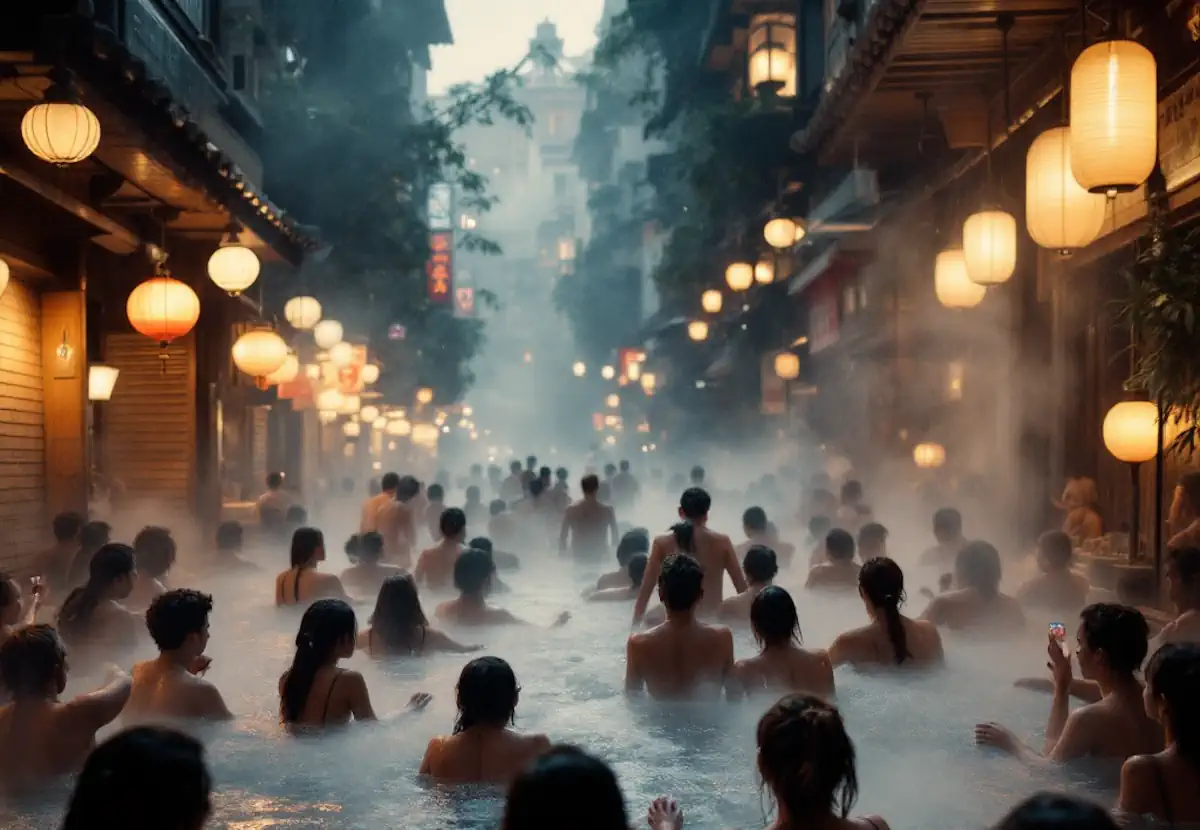
Picture this: You’re immersed in steaming, mineral-rich waters, surrounded by the serene beauty of Japan’s natural landscapes. The stress of daily life melts away as you soak in centuries of tradition. Welcome to the world of onsens, Japan’s beloved hot springs.
What’s the Big Deal About Onsens?
Onsens aren’t just fancy bathtubs. They’re a cornerstone of Japanese culture, offering more than mere relaxation. These natural hot springs are a gateway to understanding the heart of Japan itself.
But what makes an onsen special? It’s all about the water. To be officially recognized as an onsen in Japan, the water must be geothermally heated to at least 25°C and contain one or more of 19 designated minerals. This strict definition ensures you’re experiencing the real deal – a natural wonder shaped by Japan’s volcanic geography.
A Dip into History
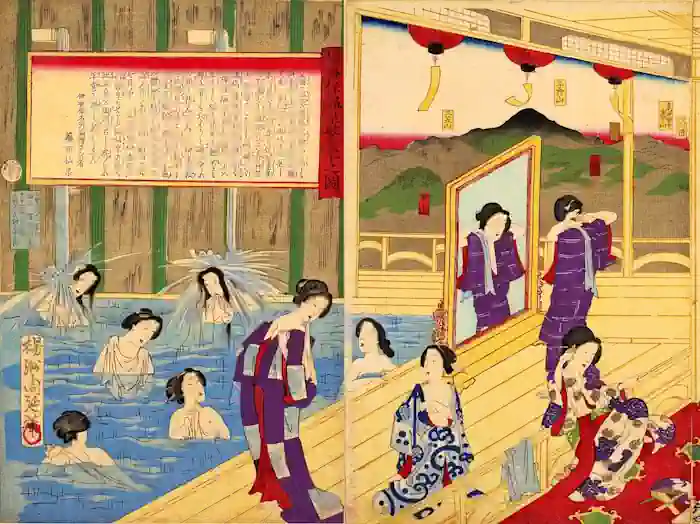
The story of onsens is as old as Japan itself. The earliest mention of these hot springs dates back to theThe story of onsens is as old as Japan itself. The earliest mention of these hot springs dates back to the 1st century, found in the ancient text “Nihon Shoki”. But the onsen culture we know today really took off with the arrival of Buddhism around 500 AD.
Imagine samurai soaking their battle-weary bodies in these healing waters. By the 1700s, the therapeutic qualities of geothermal bathing were being studied in earnest. Fast forward to today, and onsens remain a vital part of Japanese life, blending tradition with modern wellness practices.
Not All Hot Springs Are Created Equal
Onsens come in various flavors, each offering a unique experience:
- Sulfur Onsens: Known for their egg-like smell, these are believed to work wonders for skin conditions.
- Carbonated Onsens: Dubbed “heart baths,” they’re great for boosting circulation.
- Iron Onsens: Recognizable by their rust-colored water, they’re a boon for those with anemia.
- Radium Onsens: Slightly radioactive, these rare gems are said to offer unique health perks.
- Black Onsens: Dark and mysterious, these are packed with skin-loving humic acid 5.
More Than Just a Bath
Onsens aren’t just about getting clean. They’re a social equalizer, a spiritual cleanser, and a canvas for folklore. When you step into an onsen, you’re not just soaking in hot water – you’re immersing yourself in Japanese culture.
In the onsen, everyone’s equal. CEO or student, you’re all in the same boat (or bath, in this case). It’s a rare space in Japanese society where hierarchies dissolve along with your stress.
The Onsen Experience: What to
First-time onsen-goer? Don’t sweat it (well, actually, do). Here’s what you need to know:
- Leave your modesty at the door: Onsens are typically enjoyed in your birthday suit. It might feel strange at first, but it’s all part of the experience.
- Cleanliness is key: Always shower thoroughly before entering the bath. It’s not just polite – it’s essential.
- Respect the tranquility: Keep noise to a minimum. The onsen is a place for quiet reflection.
- Mind your towel: Small towels are provided, but they shouldn’t touch the water. Most people place them on their heads while bathing.
Healing Waters: More Than Skin Deep
The therapeutic benefits of onsens are well-documented and have been recognized for centuries. Different types of onsens offer various health benefits based on their mineral composition:
- Stress Relief: The warm water and peaceful environment are nature’s antidote to stress.
- Improved Sleep: Many people report better sleep quality after an onsen bath.
- Pain Relief: The heat and buoyancy of the water can alleviate joint and muscle pain.
- Skin Health: The minerals in onsen water can improve skin conditions and promote a healthy complexion.
A Tour of Japan’s Onsen Hotspots
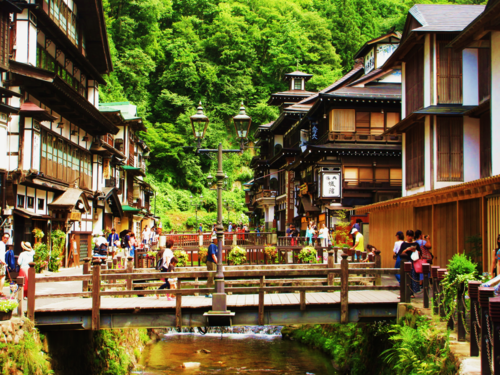
Japan is dotted with onsen resorts, each offering its own unique charm. Here are some must-visit locations:
- Beppu, Oita Prefecture: Known as the onsen capital of Japan, Beppu offers a variety of hot springs, including unique sand and mud baths.
- Hakone, Kanagawa Prefecture: Soak while taking in stunning views of Mount Fuji 2.
- Kusatsu, Gunma Prefecture: Famous for its sulfur-rich waters and traditional onsen town atmosphere.
- Noboribetsu, Hokkaido: Set in a picturesque volcanic landscape, it offers a range of onsens with different mineral compositions.
- Kinosaki, Hyogo Prefecture: This charming town is known for its seven public onsens, perfect for onsen-hopping.
The Modern Onsen: Where Tradition Meets Luxury
While many onsens maintain their traditional charm, the industry has also evolved to meet modern expectations. Today, you can find luxury onsen resorts that offer a perfect blend of traditional Japanese hospitality and contemporary comforts.
Imagine soaking in a private outdoor bath, then retiring to a room with tatami floors and futon beds, followed by a multi-course kaiseki dinner. It’s a sensory journey through the best of Japanese culture.
More Than Just a Dip
The Japanese onsen experience is far more than just a bath. It’s a journey through history, a cultural immersion, and a therapeutic retreat all rolled into one. From the steaming waters of Hokkaido to the subtropical springs of Okinawa, onsens offer a unique window into the soul of Japan.
So the next time you find yourself in Japan, don’t just visit an onsen – immerse yourself in the experience. Let the warm waters wash away your stress, soak in the minerals, and connect with a tradition that has been cherished for over a thousand years. After all, in an onsen, you’re not just cleansing your body – you’re refreshing your spirit and gaining a deeper understanding of Japan’s rich cultural tapestry.